
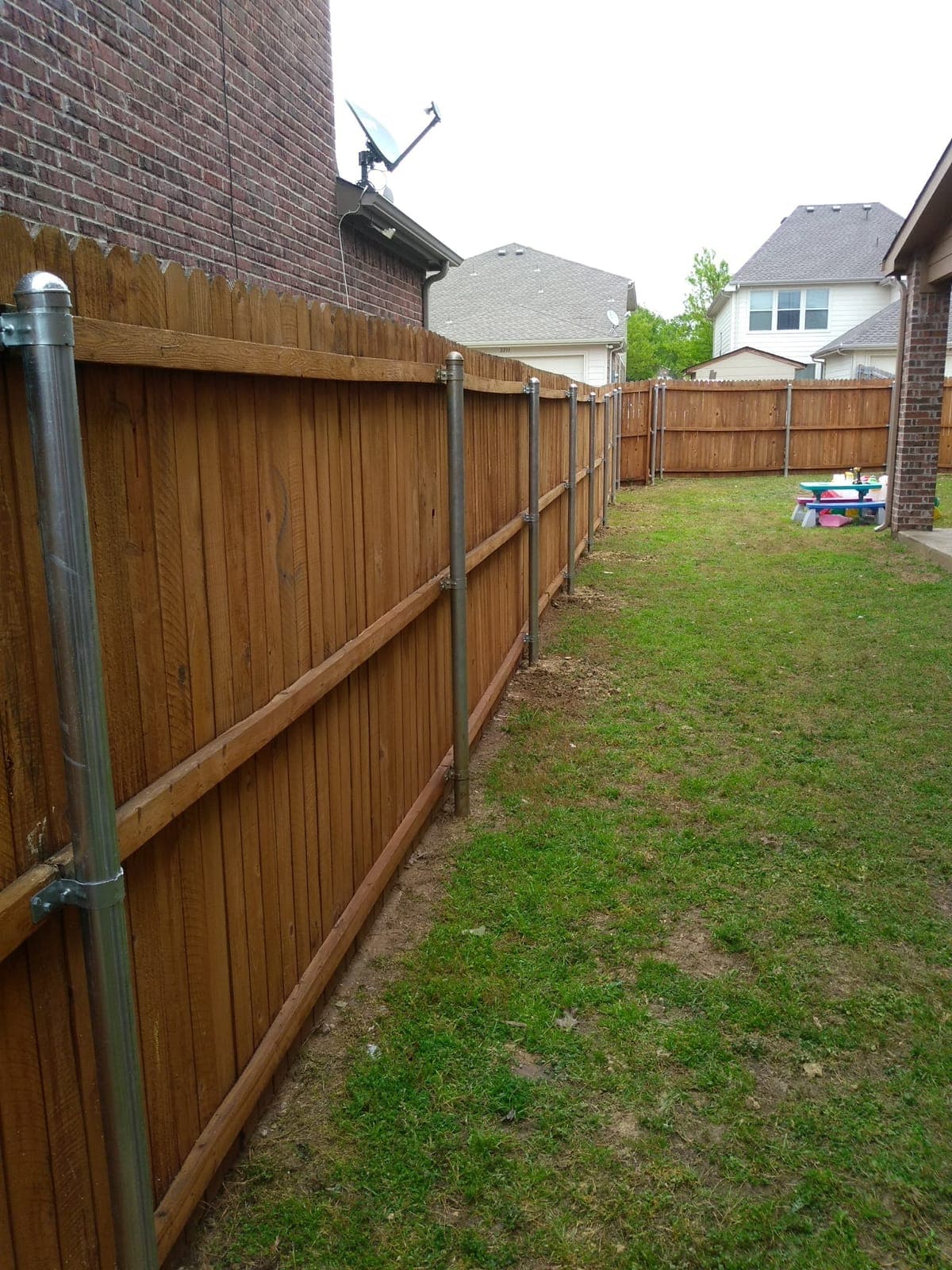
When repair beats replacement
A new cedar fence is a $5,000–$10,000 commitment. If your existing fence is structurally sound — most posts are vertical, the rails aren't rotting, the cedar above ground is still solid — repair and re-stain will buy you another 5–10 years for a quarter of the price of replacement. The math usually breaks down like this:
- Under 8 years old, cosmetic issues only: Re-stain. Averages $1,000–$3,000 for a typical residential fence.
- 8–12 years old, a few bad pickets and 1–2 leaning posts: Repair + stain. $1,500–$3,500 for a typical residential fence.
- 12–18 years old, post bottoms rotting, multiple gate failures: Full replacement is usually a better value.
- 18+ years old: Replace. The hardware costs to keep an old fence running exceed the new-build cost.
What we repair
The four most common DFW fence repair calls — and what each one involves:
- Leaning or broken posts. Dig the old post out and set a new 13-gauge heavy-duty steel post with Simpson Strong-Tie brackets, lag screws, and a post cap, in Maximizer concrete at a minimum 30 inches deep. Then re-attach the rails. $150–$200 per post.
- Broken pickets from wind, kids, or storm debris. Pull the broken boards, install matching new pickets, fasten off. On a fence a year old or older we use screws — the wood has dried and settled, so screws hold better than nails without splitting. ~$8–$15 per picket installed.
- Sagging gates. Re-square and re-brace the gate and replace failed hinges — three per gate, with a heavy-duty latch and black hardware. ~$150–$350 per gate.
- Rotted bottom rails. Pull the bottom rail, replace with new pressure-treated 2x4, re-attach pickets. ~$8–$12 per linear foot.
How we stain
Most of the "stained" fences in DFW were sprayed once at install, never re-coated, and are now gray. We do staining differently:
- Pressure-wash first. Low-pressure (1500–2000 PSI) wash with a fan tip to remove gray UV layer and mold without raising the wood fiber.
- Dry 48 hours. Surface and structural moisture content under 15% before stain hits.
- Apply oil-based semi-transparent stain. Brushed or back-brushed on horizontal application, not just sprayed. Two coats on south- and west-facing sides for better UV protection.
- Plan to re-coat in 2–3 years. Sun-exposed cedar loses color faster than shaded runs.
We use semi-transparent oil-based stain by default — Huemiller is our primary line, and we also apply Ready Seal or whatever brand your HOA specifies. Stain colors we install most often are in the brown family: Classic Cedar Tone, Walnut, and Natural.
We also offer solid stain, which is acrylic-based. It covers all imperfections and is rated to last longer than a semi-transparent coat. The trade-off is that it hides the wood grain and the knots. Solid stain is the right call when you're dealing with multiple shared fences in different colors — it brings the whole fence into one uniform color.
Storm damage
After major DFW storm events (Spring 2024 derecho, October 2024 hail), we did 60+ insurance repair claims in a single quarter. The pattern is well-established: we itemize on the standard Xactimate line items most local adjusters use, take photos before and after, and provide a written report with the final bill. Most claims pay out for like-kind replacement (cedar for cedar, not pine for cedar) if your policy covers it. Talk to your adjuster about it.
If your fence is too far gone to repair, see our new fence installation service.